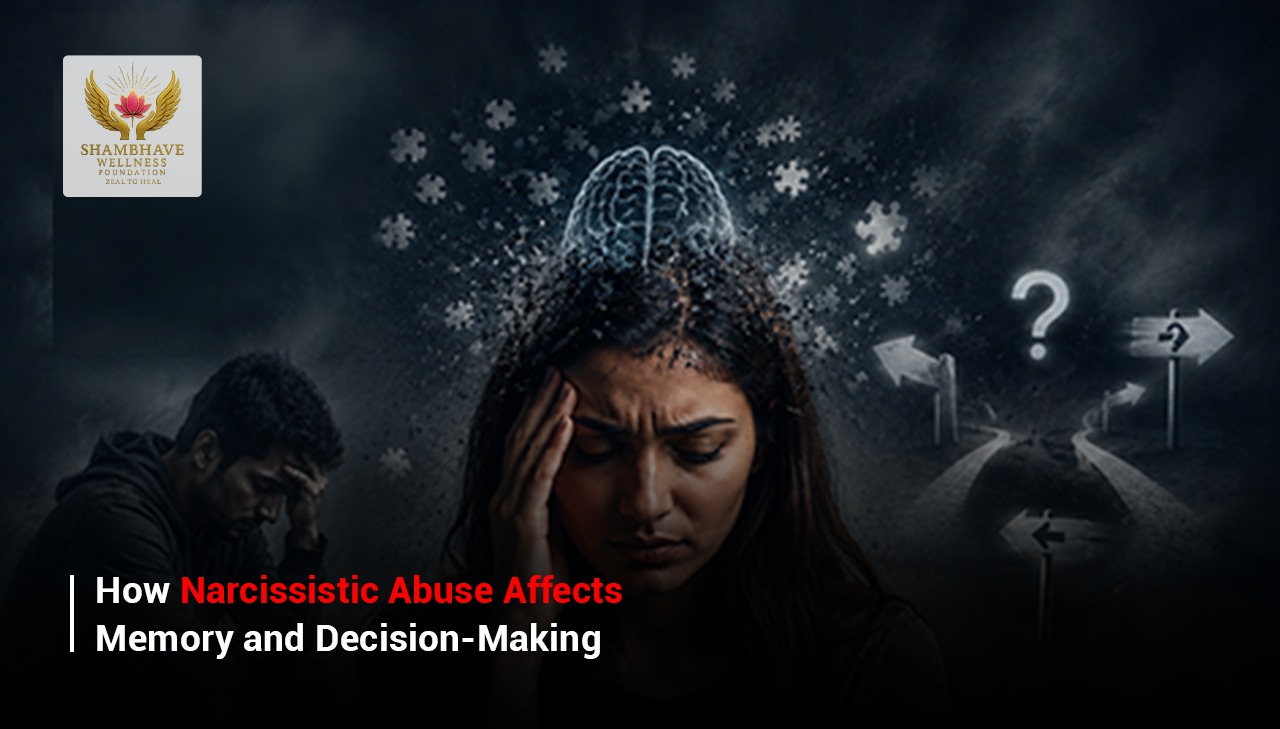
Not as commonly talked about but just as harmful are the effects that long-term relationship abuse can have on one’s memory and nervous system. Often, victims find themselves experiencing:
- Memory blanks
- Confusion
- Inability to take decisions
- Intense flashbacks, or
- An inability to absorb the present world despite being safe.
Signs Of Narcissistic Abuse:
Recognizing that you’re being abused by someone who suffers from Narcissistic Personality Disorder is the first step towards recovery. Prolonged narcissistic abuse, however, may make this challenging.
Additionally, narcissistic individuals have a tendency to be manipulative and will bend reality to suit their own purposes, leaving victims feeling as though the abuse is their fault.
The following are the typical symptoms of narcissistic abuse to assist victims in recognizing and dealing with narcissistic behavior.
1. Constant Criticism:
The narcissist is always reminding you of your imperfections in terms of how you look, talk, or act in such a humiliating manner. For example, “You are such a sensitive person. No other person will tolerate you.” Everything you do wrong becomes an excuse for berating you.
2. Exploitation - Emotionally, Financially or Socially
Narcissists always take from you – your time, energy, money or contacts – with nothing in return or thankfulness. Example: They borrow money and don’t pay it back or make you rearrange your plans in order to help them, but run away when you need their help.
3. Empathy deficit
Narcissists don’t care about how their behavior affects you. Your troubles are not only ignored but also ridiculed. Example: You share your troubles and they tell you to stop complaining because you don’t know what a problem is.
4. Behavior manipulation
Narcissists misquote you, manipulate you into feeling guilty, or even give you the silent treatment in order to make things go their way. For example: “After raising my voice at you, they say, ‘You forced me into doing that. If only you were less selfish.’”
5. Isolation from other people
They isolate you from friends and family so that you come to depend on them for any social interaction and approval. Example: “Your best friend is jealous of us. You should not spend time with her anymore.” In the end, you become utterly isolated.
6. Violation of Boundaries
You set your boundaries clearly, yet they violate them in an open manner. They feel themselves entitled to infringe upon your privacy, personal space, or choice. Example: You tell them not to look at your messages, but they continue doing so and state, “If you were not hiding something, you would not mind.”
7. Shift of blame and denial
They refuse to take any responsibility and always put it upon you. In the end, you have to apologize for their actions. Example: They cheat on you, yet blame you for “being inattentive enough” or “keeping them away.”
8. Roller coaster of Emotions
They oscillate between being loving and cruel. They are sweet one day and cold or explosive another. For instance, they shower you with presents and apologies after an altercation but mistreat you once everything calms down.
If these behaviors sound like yours, then you may be suffering in an unhealthy narcissistic relationship.
Always keep in mind that it is not your fault when a narcissist in your family or other people in your surroundings treat you badly.
5 long-term consequences of maltreatment by narcissists
Narcissistic abuse could take several forms, which could include forms like emotional, psychological, financial, or even verbal abuse.
All of the above-mentioned forms of abuse may have adverse effects on the physical, emotional, and mental state of the individual suffering from it—something referred to as narcissistic victim syndrome or narcissistic abuse syndrome.
The following is how narcissistic abuse can affect one’s mind and body in the long term.
1. Low self-worth
The experience of being subjected to narcissistic abuse can significantly and destructively affect the victim's self esteem. The persistent attacks, criticisms, and put-downs of the narcissist can slowly but surely undermine the victim's self-worth.
As the narcissistic abuse progresses, the victim will eventually come to believe the negative statements of the narcissist, feeling unlovable and flawed.
Over time, the victim can become afraid of failure and be unable to develop self confidence. This in turn impacts their ability to make decisions independently.
2. Struggles with Relationship:
Narcissistic abuse can affect the victim’s capacity to develop healthy relationships to a considerable degree.
They might have difficulty trusting other people, establishing boundaries, and feeling sure of themselves due to the consequences of narcissistic abuse.
It can result in serious communication difficulties and create the risk of falling into the same vicious cycle of relationships again.
3. Psychological Effects
One of the possible results of narcissistic abuse is the emotional trauma experienced by the victim, which in its turn can have a negative impact on the psychological state of the individual.
Narcisstic abuse results in cognitive impairment, anxiety, depression, and even post-traumatic stress disorder.
Additionally, the victim faces problems with the regulation of emotions due to these psychological imbalances
4. Physical Health conditions
Consequences of narcissistic abuse on mental health also contribute to physical health conditions in victims due to a proven mind-body connection.
Such feelings result in insomnia, headaches, muscular tensions, and stomach complaints.
Sometimes, victims even neglect their health due to developing poor eating habits and addictions as a means of coping with narcissistic abuse.
5. Difficulties with functioning
In extreme cases, the long-term consequences of narcissistic abuse may interfere with an individual's ability to carry out their day-to-day activities and to lead a fulfilling life.
They may find it difficult to hold down a job due to feelings of inferiority or fear from the past abuse.
They also may have difficulties with forming and maintaining healthy relationships and building their self-image, leading to loneliness and, in some cases, suicide ideation.
Strategies for recovering from the consequences of narcissistic abuse
Recovering from the lasting impacts of narcissistic abuse involves patience, work, and assistance. Once you realize you have been a victim of narcissistic abuse, and realize that the reactions you are feeling are normal for victims of trauma, there are other things you can do to recover. Here are some steps you can take to help yourself heal:
- Seek Professional Help
- Establish boundaries
- Prioritize self-care
- Form a support system
- Learn to Forgive yourself
Seek Professional Help
Try to go into therapy with an experienced professional who knows how to deal with patients who have been victims of trauma and narcissistic abuse. A safe environment for processing your experiences, learning coping mechanisms, and resolving any residual trauma can be found in therapy.
Shambhave Wellness Foundation is a non-profit organization dedicated to nurturing the social, emotional, and mental well-being of senior citizens and women, especially those who are unable to access mental health support due to financial constraint
Establish boundaries
Start practicing healthy boundaries in your relationships (particularly in narcissistic relationships). Being able to say no and taking care of yourself is important in order to help build your self-respect and save yourself from being further harmed.
Practice self-care
Take up some activities that contribute to your physical, mental, and emotional health. These may include exercising, meditating, spending time outdoors, indulging in hobbies, and meeting supportive friends and relatives.
Create support systems
Make sure that there are understanding and supportive individuals around you, which will help validate your experience and motivate you. Simply put, find somebody with whom you have a healthy relationship and try spending more time with them. Getting into support groups, or even groups on social media where victims of narcissistic abuse share their experience and lessons on creating healthy relationships, may be helpful as well.
Forgive yourself
Stop blaming and shaming yourself and forgive yourself for any mistakes or flaws you might have. Do not forget that you are not to blame for any of the abuse committed against you – narcissistic abuse is a responsibility of narcissists.
Healing From Narcissist Abuse Begins With Shambhave Wellness:
Shambhave Wellness Foundation is a pioneering platform dedicated to holistic healing, integrating the depth of modern psychology with the wisdom of ancient Vedic sciences.
Led by Dr. Amita Puri, a world-renowned clinical psychologist and widely recognized as one of India’s first clinical psychologists to innovate beyond conventional frameworks, the foundation brings a unique, transformative approach to mental and emotional wellbeing.
Dr. Puri is the pioneer of Subconscious Energy Healing Therapy (SEHT) and has also developed powerful therapeutic modalities such as:
- BET (Boundaries Enhancement Therapy)
- Psycho Astro Therapy (PAT).
Her work bridges the gap between science and energy-based healing, offering deep and lasting transformation.
In collaboration with Acharya Ravindra Sharma, the Co Director of the foundation, Shambhave Wellness creates a powerful synergy of:
- Manovigyan (Modern Psychology)
- Vaidik Vigyan (Ancient Vedic Knowledge)
This integration enables a holistic healing approach that addresses the mind, emotions, and deeper subconscious patterns.
A global authority in narcissistic abuse recovery , Dr. Amita Puri has transformed and empowered thousands of lives across continents through her therapeutic work, workshops, and healing interventions.
Her approach goes beyond symptom management - focusing on root-cause healing, emotional liberation, and self-empowerment.
Also Read: The 5 Signs To Know You're In A Narcissistic Relationship
- Seek Professional Help