Relationships are meant to give us support, trust and emotional security.. When one partner has narcissistic traits the relationship can become emotionally draining, confusing and damaging. People often wonder why someone stays in a relationship despite the obvious emotional pain. The truth is, it's not simple to leave. Narcissistic relationships create psychological, emotional and sometimes financial bonds that make it hard to walk away.
Understanding why these relationships are hard to leave can help individuals see patterns and take the first steps toward healing.
Understanding Relationships:
A narcissistic relationship usually involves someone who constantly seeks admiration, lacks empathy, manipulates others and puts their own needs above everyone else's. While not every self-centered person has Personality Disorder (NPD) narcissistic behaviors can hurt a partner's emotional well-being.
At the start these relationships often feel amazing. The narcissistic partner may give their partner lots of attention, compliments, affection and promises about the future. This phase, often called "love bombing " creates an emotional connection that can later make it hard to recognize or escape unhealthy behaviors.
The Cycle of Idealization and Devaluation
One reason people struggle to leave relationships is the emotional rollercoaster created by cycles of affection and rejection. Initially the narcissistic partner may make the other person feel special and loved. Over time however criticism, manipulation, emotional neglect and control start to replace that affection.
The partner who once felt cherished starts working harder to regain the approval they received at the beginning of the relationship. This cycle creates confusion and hope. The individual often believes that if they can just do something differently the relationship will return to its happier stage.
Unfortunately this pattern tends to repeat itself making the person increasingly emotionally invested in a relationship.
Trauma Bonding: A Powerful Emotional Attachment
Trauma bonding is one of the factors that keeps people trapped in narcissistic relationships. A trauma bond develops when periods of abuse are mixed with moments of kindness, affection or validation. The unpredictable nature of these rewards creates a psychological attachment, similar to the way intermittent rewards can reinforce addictive behaviors.
The person starts to focus on the positive moments rather than the overall unhealthy dynamic.
They may convince themselves that the narcissistic partner truly loves them because of these periods of affection making it hard to acknowledge the broader pattern of manipulation and emotional harm.
Erosion of Self-Esteem
Over time narcissistic partners often undermine their partners confidence and self-worth. Through criticism, blame-shifting, gaslighting and subtle put-downs they can gradually make the other person question their own judgment, abilities and value.
As self-esteem declines, leaving the relationship can feel overwhelming. Many individuals start to believe they are incapable of finding a relationship or that they somehow deserve the treatment they are receiving.
This loss of confidence can create a sense of dependency on the person causing the emotional harm.
Gaslighting and Self-Doubt:
Gaslighting is a tactic used in narcissistic relationships.
It involves manipulating someone into questioning their memories, perceptions or reality. For example a narcissistic partner may deny events that occurred, shift blame or accuse their partner of being overly sensitive. With due time this creates confusion and self-doubt.
When a person can no longer trust their perceptions, making major decisions—such as ending the relationship—becomes much more difficult.
They may constantly second-guess themselves. Wonder whether they are overreacting or misunderstanding the situation.
Fear of Being
Many people remain in relationships because they fear loneliness more than the relationship itself. Narcissistic partners often exploit this fear by suggesting that no one else would understand, love or accept their partner.
They may isolate them from friends, family or support networks making the relationship feel like their source of connection. The prospect of starting over can feel intimidating after years of emotional manipulation.
As a result some individuals stay because the familiar pain of the relationship feels less frightening than the uncertainty of leaving a relationship.
Financial and Practical Dependence:
In some cases leaving is complicated by concerns. Shared finances, housing arrangements, children or career dependencies can create obstacles. A narcissistic partner may intentionally maintain control over resources or discourage their partners independence.
This can leave the feeling trapped particularly if they worry about their ability to support themselves or their family after separation. The logistical challenges of leaving often add another layer of difficulty to an emotionally complex situation.
Hope for Change:
Hope is often one of the forces keeping someone in a narcissistic relationship.
Many individuals remember the attentive person they met at the beginning of the relationship and believe that version still exists beneath the hurtful behaviors.
They may hold onto promises of change, apologies or brief improvements. While personal growth is possible for anyone, lasting change requires self-awareness, accountability and consistent effort.
Unfortunately many narcissistic individuals struggle to acknowledge their role in relationship problems making meaningful change difficult without intervention.
Social Pressure and Shame:
Society often encourages people to "fight for love" and work through relationship difficulties.
While commitment is valuable in relationships these messages can make it harder for individuals to recognize when a relationship has become emotionally harmful.
People may also feel embarrassed about admitting they have been manipulated or mistreated. Fear of judgment from friends, family or their community can delay the decision to leave a relationship.
Breaking Free and Moving Forward:
Leaving a relationship is rarely a single event—it is often a gradual process of recognizing unhealthy patterns, rebuilding self-confidence and seeking support.
Helpful steps may include:
- Reconnecting with trusted friends and family.
- Maintaining clear boundaries.
- Documenting incidents to counteract gaslighting.
- Seeking guidance from a health professional.
- Developing emotional independence.
- Practicing self-compassion throughout the healing process.
Recovery takes time. Many people find that once they are outside the relationship they gain clarity about the extent of the manipulation they experienced.
Narcissistic relationships are difficult to leave because they involve more than emotional attachment to a narcissistic partner.
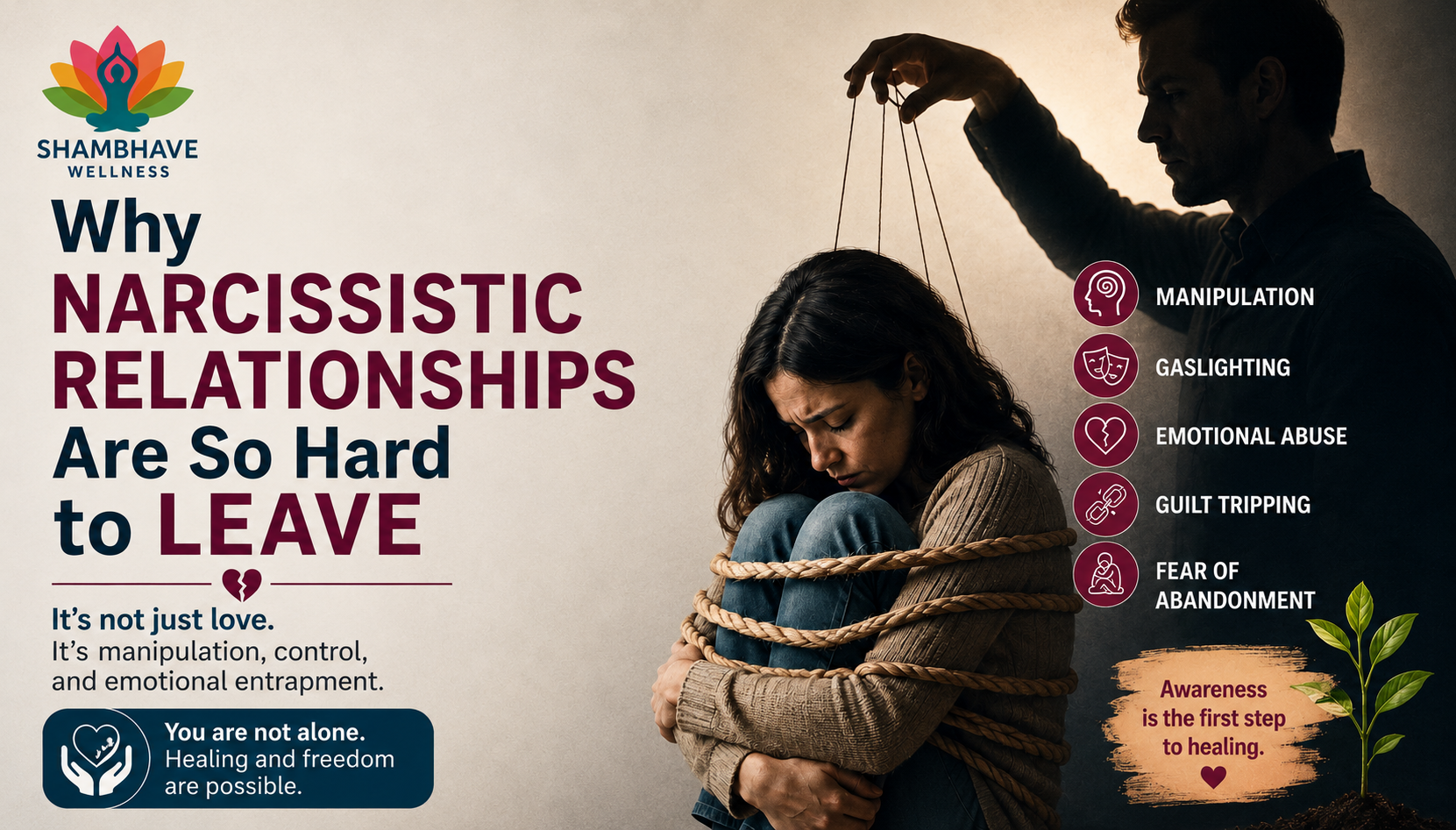
Trauma bonding, diminished self-esteem, gaslighting, fear of loneliness, financial dependence and hope for change can all create barriers to leaving.
Understanding these dynamics is a step toward breaking free from a narcissistic relationship.
While the journey may be challenging it is possible to rebuild confidence, establish relationships and create a future based on respect, trust and emotional well-being.
Recognizing that a relationship is causing harm rather than growth is often the first step toward reclaiming personal freedom and emotional health.